Why Nurses and Warehouse Workers Are Finally Getting Relief From Plantar Fasciitis (And It Has Nothing to Do With Stretching or Better Shoes)
If you work on your feet for 8 to 12 hours a day, you already know the routine.
You come home, sit down, and for a few minutes everything is fine. Then you stand back up and your heel feels like it's landing on broken glass.
You've tried the insoles. You've cycled through shoes. You've stretched in the morning, iced at night, and rested on your days off. And somehow, every time you go back to work, it starts all over again.
Here's what nobody explains about plantar fasciitis in standing workers:
- Burning heel pain that hits hardest with your very first steps in the morning
- Foot pain that builds steadily through your shift and doesn't leave when you sit down
- Hours of standing on concrete that undoes whatever recovery you managed the night before
- Treatments that reduce the pain temporarily but never seem to clear it for good
None of that means you have a structural problem that only surgery can fix.
It means your foot has a drainage problem. And the tools most people use for plantar fasciitis relief were not designed to solve it.
Here is what is actually happening inside your heel, and why EmPulse works differently for people who stand for a living.
The Problem Isn't Your Foot. It's What's Trapped Inside It.
When you stand for 10 hours on concrete or tile, your plantar fascia -- the thick band of tissue connecting your heel to your toes -- takes thousands of small impacts. Each one creates micro-inflammation in the tissue.
Under normal circumstances, your circulatory system clears this inflammatory fluid during rest and movement. But after a long shift, the fluid builds up faster than it can drain. Inflammatory proteins and byproducts accumulate in the micro-tissue around your heel and arch.
That buildup is why the pain doesn't fully clear overnight. And it's why the first step in the morning, after hours of lying still, is the worst one -- the tissue has been congested all night with no movement to clear it.
Rest stops new damage from happening. It doesn't clear what's already there.
Why Orthotics and Stretching Only Go Halfway
Orthotics and insoles are real solutions to a real part of the problem. They redistribute the pressure on your plantar fascia while you're walking, so the tissue takes fewer direct impacts per step.
But they don't touch the inflammatory fluid already sitting in your tissue when you take them off at the end of the day.
Stretching works similarly -- it lengthens the fascia and reduces morning stiffness. What it doesn't do is create the circulatory movement needed to actively drain the congestion that built up over a 10-hour shift.
Ice reduces inflammation at the surface. Heat relaxes the tissue. Both are useful. Neither creates the mechanical pump action required to move fluid out of the deep tissue around your heel.
The cycle most standing workers end up in: insoles during the day reduce the damage, but the foot never fully drains, so the baseline pain stays elevated month after month.
What EMS Actually Does That Rest and Ice Can't
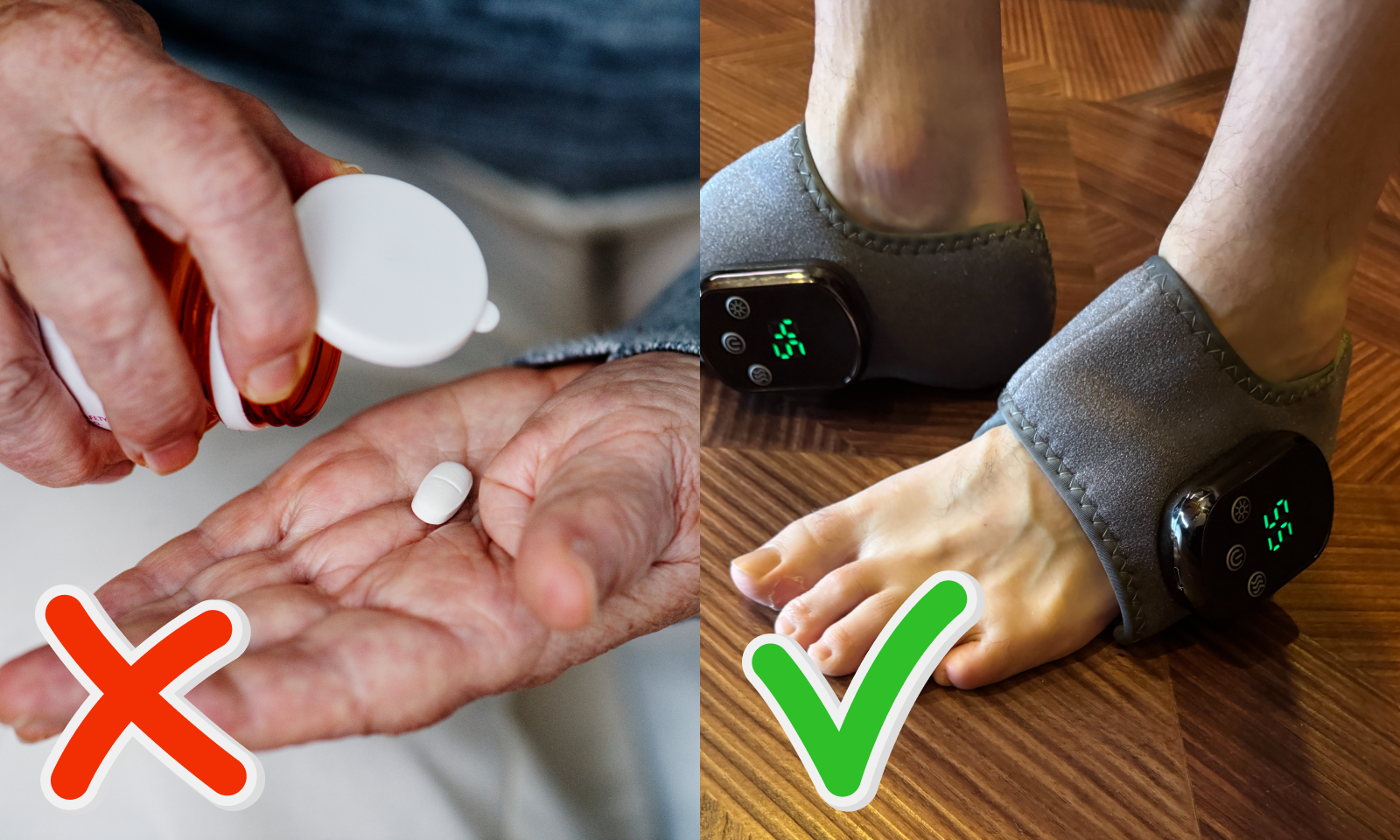
EMS (electrical muscle stimulation) sends low-level electrical pulses through your foot and lower calf. These pulses cause your deep foot muscles and intrinsic muscles of the arch to contract involuntarily -- the same muscles that normally pump blood and lymph fluid through your tissue during active movement.
When you're resting, those muscles are still. Your circulatory system slows. Inflammatory fluid pools.
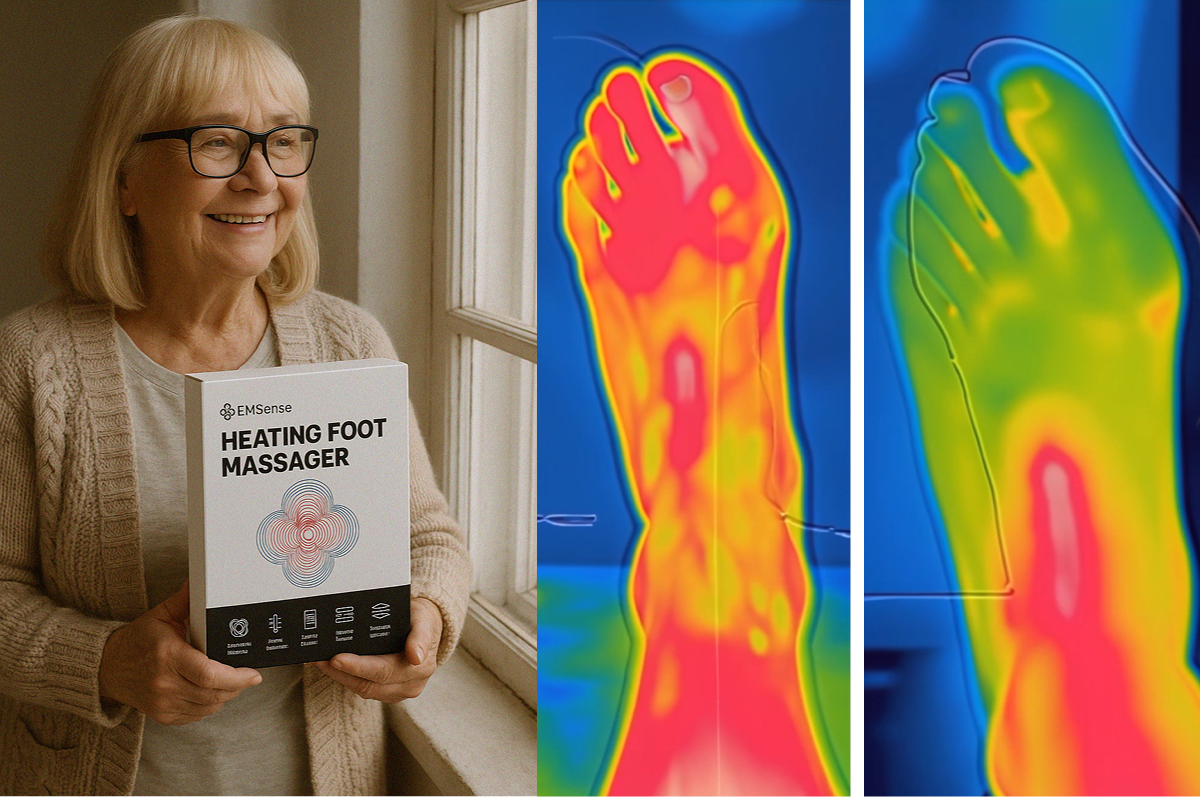
EMS overrides that stillness. Your foot is at rest -- but the muscles are contracting rhythmically, acting as a mechanical pump. Blood and lymph move through the micro-vessels surrounding the plantar fascia. The congestion that built up during your shift begins to clear.
Think of it like a clogged drain. Pouring more water in (rest, ice, compression) doesn't clear the blockage. You need a pump to force the fluid through. EMS is the pump.
Standard vibration massagers work on the surface nerve layer -- they temporarily override pain signals by stimulating the skin. When you take them off, the pain returns because the underlying fluid was never moved. EMS reaches the deeper musculature where the actual drainage happens.
The Heat + EMS Sequence: Open, Then Pump
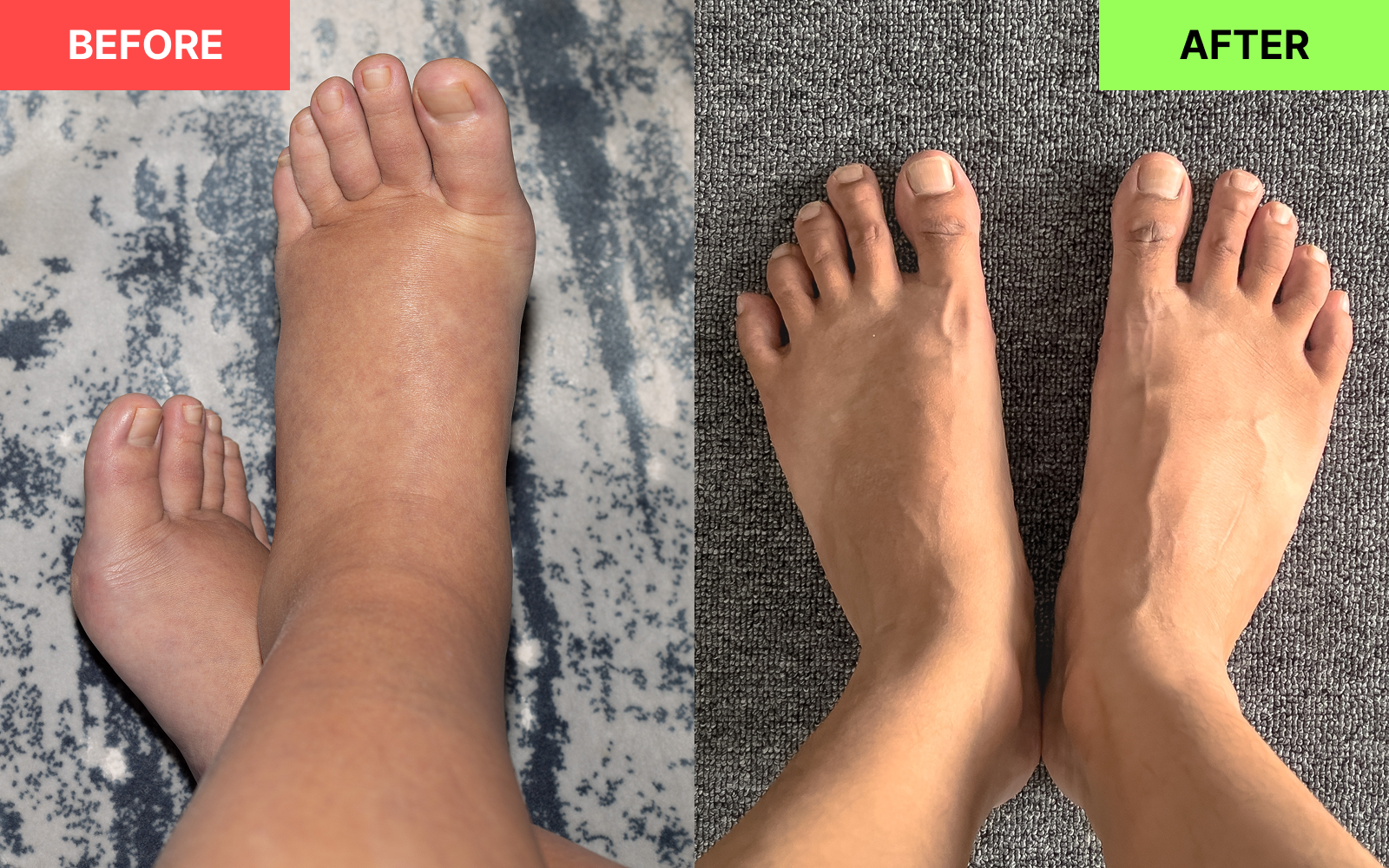
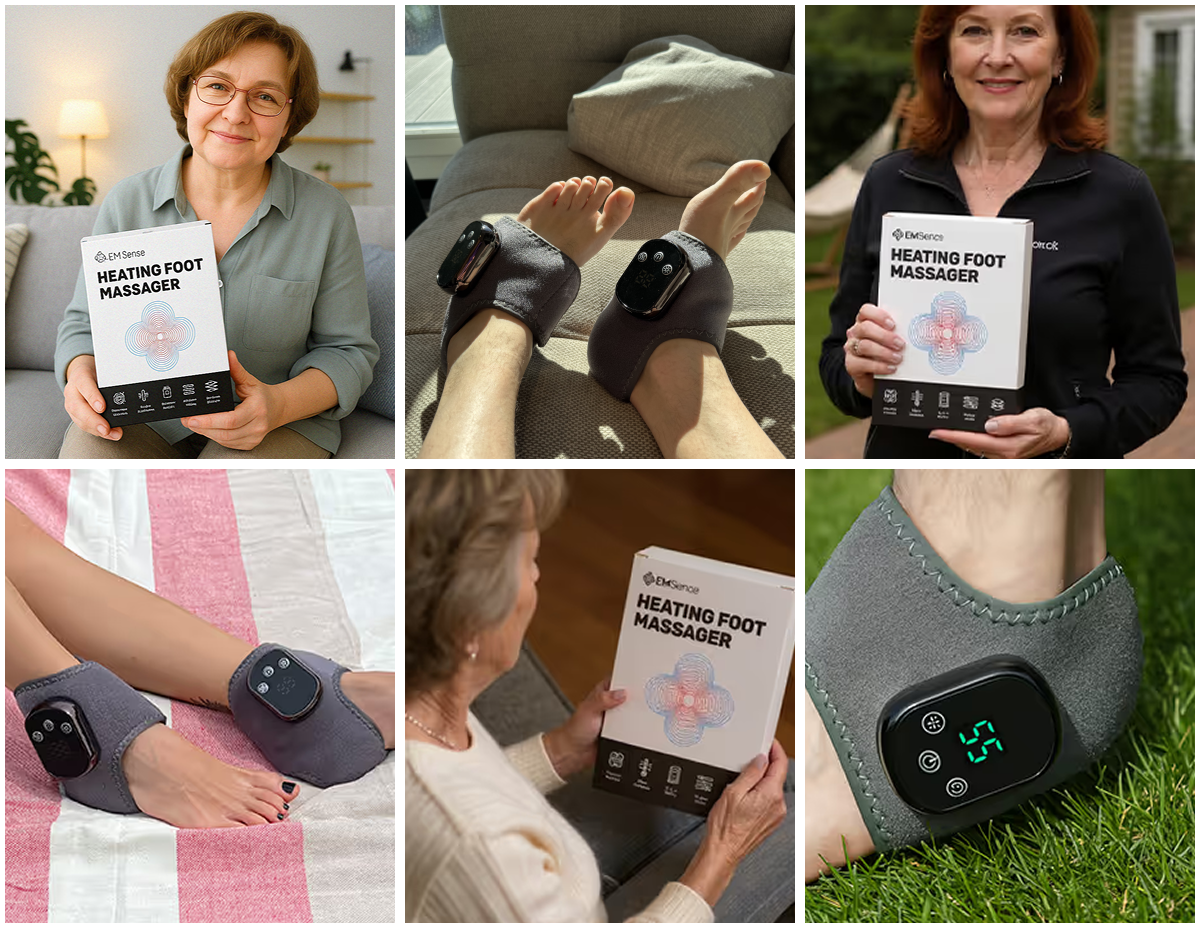
EmPulse combines resistive heat and EMS pulse on a single contact surface in a specific sequence that matters.
Heat goes first. Gentle warmth causes vasodilation -- your micro-vessels widen and the contracted plantar fascia tissue relaxes. This opens the pathways that fluid needs to move through.
Then EMS engages. The electrical pulses contract the intrinsic foot muscles through those now-open vascular pathways. The muscle contractions push blood and lymph through tissue that heat alone can't reach.
Heat without contraction creates no circulatory movement -- it relaxes tissue but doesn't drain it. Contraction without heat works against tightened, contracted fascia. The combination -- open, then pump -- is what makes the difference.
Generic vibration massagers and standard heat pads each address one part of this. EmPulse addresses both in sequence, which is why the relief it creates tends to last past the session itself.
15 Minutes After Your Shift Can Reset Your Entire Recovery
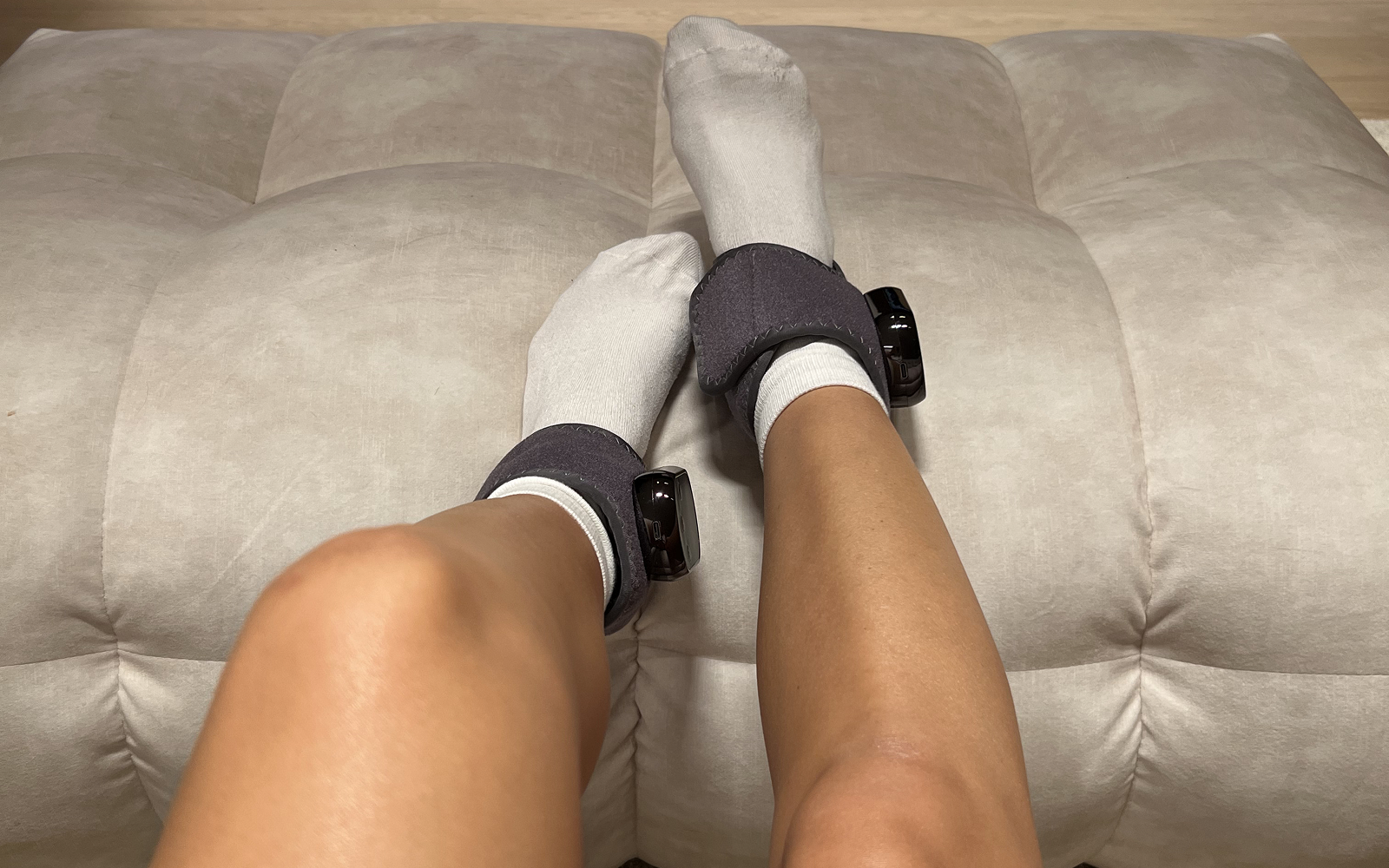
The window that matters most for standing workers is right after the shift ends -- before the inflammatory fluid has a chance to fully settle overnight.
15 minutes with EmPulse in the evening, while you're sitting on the couch or watching TV, runs the heat + EMS drainage cycle through tissue that is still warm and accessible from the day's activity. You're not trying to undo hours of congestion after it's fully set in. You're clearing it before it does.
People who use it consistently report the same pattern: morning pain decreases over the first week, not because the product is "healing" the fascia, but because the tissue is finally getting a chance to drain between shifts instead of just re-inflaming the same congested area every day.
The goal isn't a spa moment. The goal is clearance -- so the next shift starts with tissue that has actually recovered, not tissue that's been sitting in its own inflammation since Tuesday.
Why EmPulse Stands Out


Special Offer for Our Readers
Limited stock available while supplies last
What Customers Are Saying